

Resin flooring covers a wide family of systems, from thin epoxy coatings that seal and dust-proof concrete through to heavy-duty polyurethane screeds that cope with boiling water, steam cleaning and constant forklift traffic. Choosing between them comes down to a handful of practical questions: what goes over the floor, what gets spilled on it, how hot or cold it gets, how it is cleaned, and how long the area can be out of use.
Motion Flooring was founded by Simon, a specialist resin flooring contractor with extensive hands-on experience of industrial, commercial, pharmaceutical and marine projects around the world. That background shapes how we work: we survey properly, test the substrate, and put the time into preparation, because that is where most flooring failures start.
Choosing the right system
- PU screed — for wet processing, hot washdowns, thermal shock and aggressive chemicals. Typically laid 4–9 mm thick.
- Epoxy coatings and screeds — durable, easy-clean finishes for warehouses, workshops, plant rooms and production areas with moderate demands.
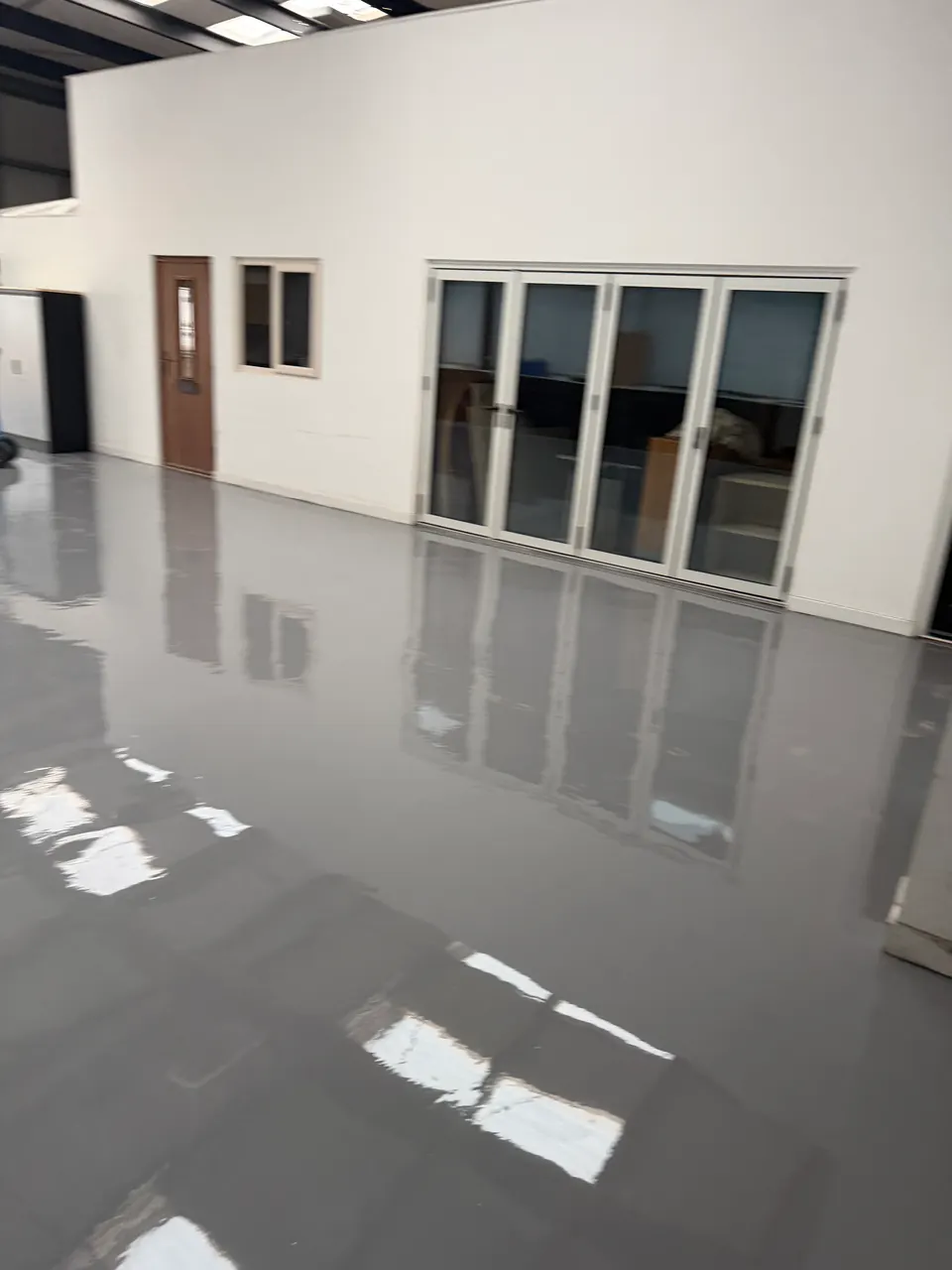
- Self-levelling (self-smoothing) resin — a smooth, seamless, high-build finish for production halls, clean areas, showrooms and commercial premises.
- Specialist finishes — decorative flake, seamless decorative and metallic floors where appearance matters as much as performance.
What we look at before we quote
- Traffic: pedestrians, pallet trucks, forklifts, steel-wheeled or point loads.
- Chemical exposure: fats, sugars, acids, solvents, cleaning chemicals.
- Temperature: hot washdowns, ovens, chillers and freezers, thermal shock.
- Hygiene and drainage: falls to drains, coving, cleaning regime.
- Slip resistance: wet or contaminated areas need a suitable aggregate profile.
- Substrate condition: strength, laitance, contamination, cracks, joints and moisture.
- Programme: how long the area can be closed, and whether phased working is needed.



Frequently asked questions
How long does an industrial resin floor last?
It depends on the system, its thickness, the substrate and how the floor is used and cleaned. A correctly specified and installed system, prepared properly, should give a long service life; a thin coating used in the wrong environment will not. We will explain the realistic expectations for your area when we specify the system.
Can you work around our production?
Usually, yes. We can phase the work, work at weekends or during shutdowns, and choose fast-curing materials where downtime is critical. Tell us your constraints at the enquiry stage and we will plan around them.
Do you cover areas outside Hull and Yorkshire?
Our core area is Hull, East Yorkshire, Grimsby and Lincolnshire, and we travel across Yorkshire. For suitable industrial and commercial projects we work nationwide.