

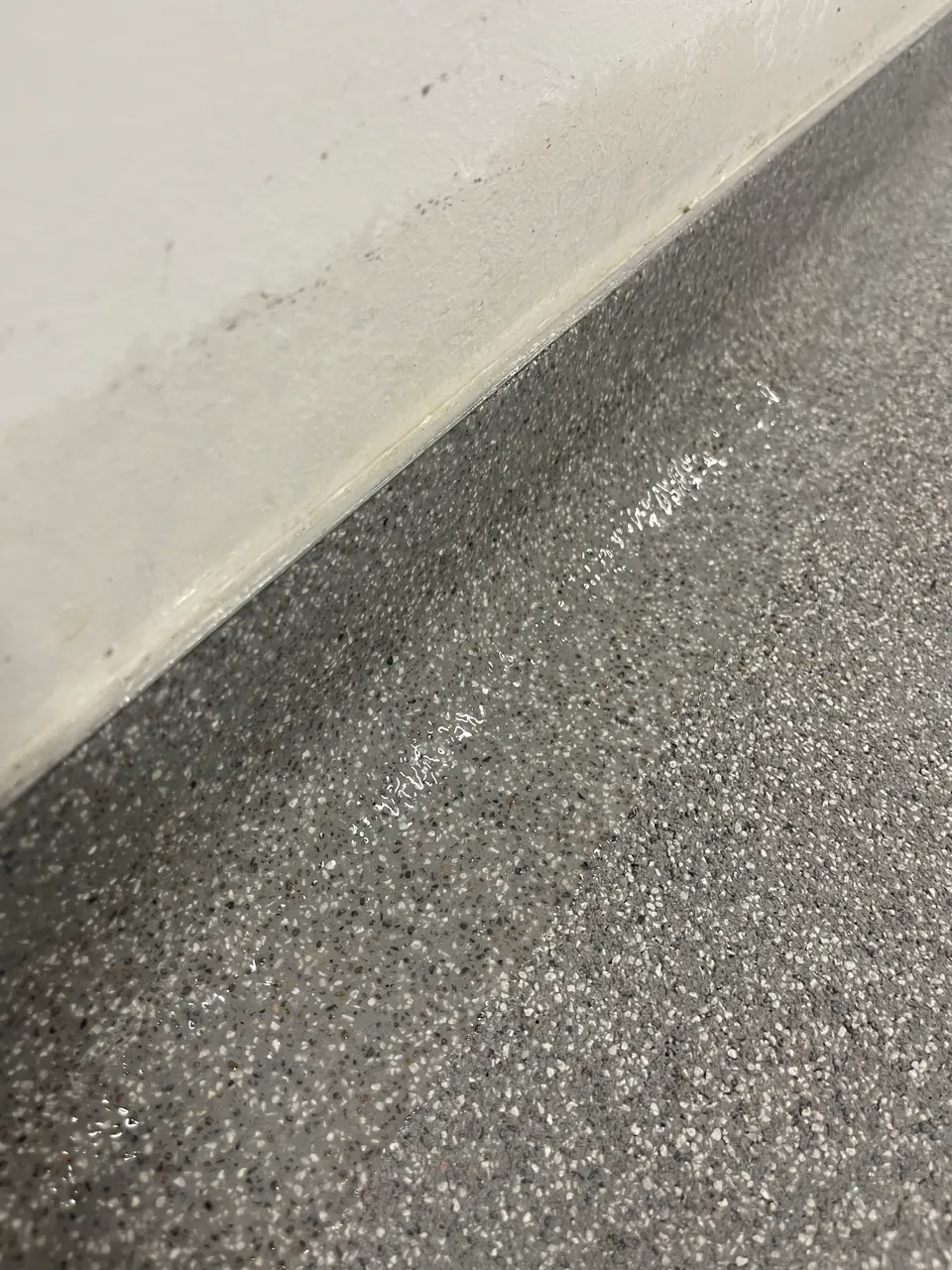
Resin coving is formed in place, typically from a trowelled resin mortar over a former, and bonded to both the floor and wall. It is usually installed with PU screed or epoxy floors so the floor and cove become one continuous, joint-free surface.
Cove heights and radii are chosen to suit the area, the cleaning regime and any client or audit requirements. Coving is also used around plinths, columns, drains and machine bases to remove hard-to-clean corners throughout a production area.
Where coving is used
- Food and drink production and preparation areas
- Commercial kitchens and wash areas
- Clean rooms, laboratories and healthcare areas
- Plinths, upstands and around fixed equipment
Done properly
- Walls prepared and sound before coving starts
- A clean, consistent radius and a neat, sealed top edge
- Continuous with the floor finish, so there is no joint at the junction
- Detailed around doors, drains and pipework



Frequently asked questions
Can coving be added to an existing resin floor?
Often, yes, if the existing floor is sound. The edge of the floor is prepared so the new cove bonds to it, and a top coat can then be applied over the junction.